experiment · UNSW · March 2021
'heavens'
The Thing From The Future
An artefact from a future that doesn't exist — a home on the Moon, designed as a way of arguing about the one that might.
The hand I drew asked for a magazine. What I made was a house on the Moon.
The Thing From The Future deals you a future — timeframe, terrain, mood, and an object — and you describe something that could only exist there.
Getting there
The brief pushed towards a package of information and ideas surrounding a particular identity — the way a magazine works. My two working definitions were the physical booklet form, and a portable package of ideas that gives a brand its visual identity but is really defined by the content stored inside it.
Two concepts came before the final one.
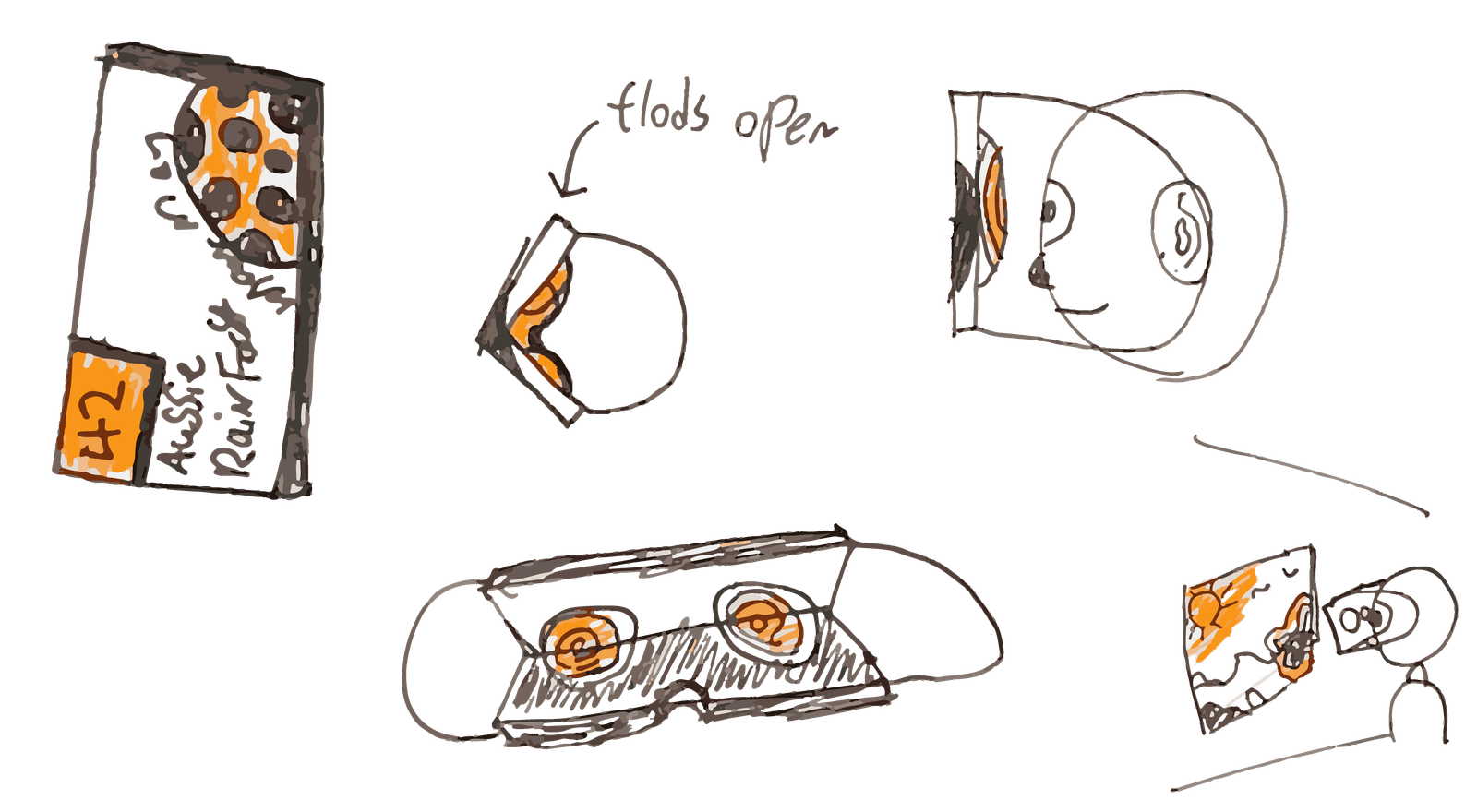
Moon Mag was a virtual reality magazine. Each month a new issue arrives as a self-contained VR headset loaded with one experience built around that month. Like event television, the aim was a short, meaningful experience shared across a small community — everyone going through the same natural environment of Earth at the same time, building a sense of community through anticipation and shared reference. Its weakness was that it onboards people only at the start of a cycle: pick it up at the end of the month and you get two days with it. And its connection to the moon was decorative rather than structural. Moon Mag would work as well for a traveller from London in Sydney as it would for an astronaut.
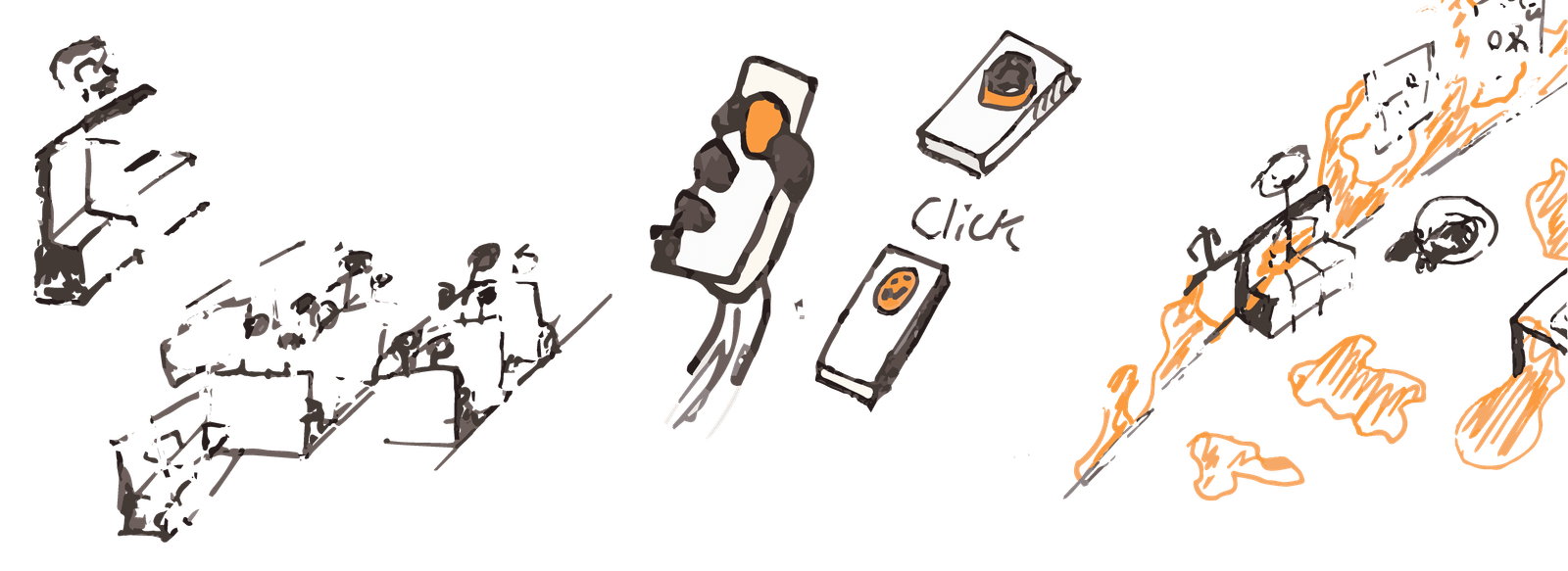
Pocket Home was the second: bring every aspect of the home into the digital world, accessed by pressing a single button, with no headset needed. Homes get shared like magazines — you look through articles and images, pull them straight off the page and into your home, or spend a holiday in someone else’s by shifting into a cabin in Hobart or a tent in Yosemite. When you get home, the virtual and physical environments line up, so you cross between them without noticing. Move house and the bathrooms, kitchen and windows change, but the rest can stay the same.
The precedents were Playdate — a handheld console that delivers a new game each week rather than a catalogue — and VRChat, which already creates spaces for people to meet regardless of physical distance.
The future it belongs to
In the post-pandemic era there were two competing trends: nationalistic protectionism and hyper-globalism. Over the following decade economic recovery floundered — yet in a unique act of international cooperation, nine quarantine cities were established around major international airports. JFK, Keflavík, Charles de Gaulle, Sheremetyevo, Murtala Muhammed, Dubai International, Indira Gandhi, Pudong and Kingsford Smith.
Within each city you could travel freely without a two-week quarantine. Outside them, international travel still happened but grew steadily less popular against the convenience of the Collected Cities Network. Soon enough a unified currency was adopted, the cities drifted from their national identities, and a genuinely distinct culture formed between the host nations — which started a thirty-year program to move every home into the digital world.
Each home was completely customisable. As small or as large as needed; thousands of rooms or one; a log cabin or a kilometre-tall skyscraper. Whatever made the dweller feel at home, the house could be.
‘heavens’
The one significant limitation was environmental. The custodians had spent years working to quell any sense of nationalism attached to each state’s natural environment, and there were real worries that letting these homes sit inside a particular city or country would undo that.
So they went up.
‘heavens’ is a place you could live an existentially authentic life, with a community not bound by space and — someday — not bound by time. During the night, as a dweller walked through the streets of whatever city they found themselves in, they always felt at home when they could look up at the sky and see their home shining gently down on them.
I built it in Microsoft Maquette: a home with no walls and a roof on the Moon. A neo-classical aesthetic, marble-esque columns along the living platform’s edge, autumn trees softening the environment, shifting scales tuned to the observation chair. I played with a home theatre room and what that looks like when you control every spec of the world — and found it too abstract, too uninterested in the digital.
What I’d question
Ultimately I found the design too abstract in its aesthetic and not curious enough about what the digital world could actually be. The strongest version was a storyboard modelling the interaction rather than the object: a user on a high-speed train from Sydney to Melbourne, noisy carriage, so they decide to spend some time at home. They put on their headset headphones, and they’re immersed in the part of their home designed to be a log cabin — relaxing in front of a fire, maybe listening to an audiobook — before finding some rest, and waking as they approach the station.
There’s a tension in the assignment itself. A good speculative solution shouldn’t be preoccupied with one element of the system, and yet we have to hold close and stage the elements of our life-world we believe should stay unchanged, while throwing out other notions we perceive as irrelevant or mundane.
The tension is real and I didn’t resolve it. A speculative design shouldn’t fixate on one element of the system — but building a Thing means holding a few parts of life still while you throw the rest out, and choosing which is the whole job.
Full document, sketches and figures in the PDF below.